
8-Day Oman Itinerary
An eight day Oman loop that answers the two questions which actually decide the trip: which car, and which months.
Last updated . Mountain seasons, road access, fares and yurt camp opening all move year to year, and the seasonal windows here move most. Recheck the official sources below before travelling.
Oman is a driving country, and two questions decide the trip before any of the sights do: what car to hire, and which months to come. Both get answered badly online, usually with a blanket yes on the 4x4 and no warning at all about the heat. The truthful version is more useful, because it saves money on one and saves the holiday on the other.
How many days do you need in Oman?
8 days for the standard loop: 2 in Muscat, 2 on the coast and the wadis, 1 in the sands and 3 for Nizwa and the mountains.
Five days covers Muscat and the coastal wadis comfortably. The extra three are what buy Nizwa, Jebel Shams and a night in the desert, which is where most of the country actually is.
Do you need a 4x4 in Oman?
Not for everything. The climb to Jebel Shams is surfaced for the part that matters and plenty of people do it in a 2WD in dry weather.
Where clearance genuinely earns its money is the rougher wadi approaches and any soft sand. If your route is Muscat, the coast, Nizwa and Jebel Shams, a normal car is usually enough. If it includes desert camps or the unsurfaced wadi tracks, take the 4x4 and do not argue with it.
When should you avoid Oman?
The 4 hottest months, roughly June to September. The wadis are the worst of it, because bare rock radiates heat back at you all day.
October to April is the season, and it is when the search interest for Oman peaks too. Even inside it, plan wadi walks for the morning rather than the middle of the day.
How do you get into Wadi Shab?
You park, take a small boat across the inlet for a few rial, then walk about 45 minutes up the gorge.
The boat is not optional and it is not a tour, it is simply how the entrance works. Beyond the walk there is swimming through a slot in the rock to a cave, which needs a dry bag if you are carrying anything.
The plan at a glance
- Day
- 1
- Where
- Muscat
- What needs arranging
- The hire car
- Day
- 2
- Where
- Muscat
- What needs arranging
- Nothing fixed
- Day
- 3
- Where
- Bimmah and Wadi Shab
- What needs arranging
- Nothing fixed
- Day
- 4
- Where
- Sur and the turtle reserve
- What needs arranging
- Turtle viewing, which is permit based
- Day
- 5
- Where
- Wahiba Sands
- What needs arranging
- A desert camp, and a 4x4 for the sand
- Day
- 6
- Where
- Wadi Bani Khalid and Nizwa
- What needs arranging
- Nothing fixed
- Day
- 7
- Where
- Jebel Shams
- What needs arranging
- Nothing fixed
- Day
- 8
- Where
- Back to Muscat
- What needs arranging
- Nothing fixed
| Day | Where | What needs arranging |
|---|---|---|
| 1 | Muscat | The hire car |
| 2 | Muscat | Nothing fixed |
| 3 | Bimmah and Wadi Shab | Nothing fixed |
| 4 | Sur and the turtle reserve | Turtle viewing, which is permit based |
| 5 | Wahiba Sands | A desert camp, and a 4x4 for the sand |
| 6 | Wadi Bani Khalid and Nizwa | Nothing fixed |
| 7 | Jebel Shams | Nothing fixed |
| 8 | Back to Muscat | Nothing fixed |
The route at a glance
9 mapped stops · 8 days
Live route map
OpenStreetMap tiles
Loading the OpenStreetMap map.
Route stops
Follow the numbered order through each day.
Day 1: Muscat
- 1Sultan Qaboos Grand Mosque · about 2 hours
- 2Mutrah Corniche and souq · about 3 hours
Day 2: The rest of Muscat
- 3Old Muscat and the harbour forts · about 3 hours
- ·The Royal Opera House quarter · about 2 hours
Day 3: Bimmah and Wadi Shab
- 4Bimmah Sinkhole · about an hour
- 5Wadi Shab · about 5 hours
Day 4: Sur and the turtles
- 6Sur · about 3 hours
- ·Ras al Jinz turtle reserve · about 3 hours
Day 5: Wahiba Sands
- ·Wahiba Sands · about 3 hours
- ·A night in the dunes · overnight
Day 6: Wadi Bani Khalid and Nizwa
- 7Wadi Bani Khalid · about 3 hours
- 8Nizwa fort and souq · about 3 hours
Day 7: Jebel Shams
- 9The road up Jebel Shams · about 2 hours
- ·The Balcony Walk · about 4 hours
Day 8: Back to Muscat
- ·Bahla or Jabreen fort · about 2 hours
- ·The drive to Muscat · about 2 hours
Day 1: Muscat
A capital spread thinly along a coast, with the mountains coming down to the sea between districts.
- On foot
- About 4 km on foot, and driving between districts
- Book before you go
- The hire car, collected at the airport
Morning
Sultan Qaboos Grand Mosqueabout 2 hours
Open to non Muslim visitors in the mornings only, and the dress code is enforced. Worth getting right rather than turning up in the afternoon.
Afternoon
Mutrah Corniche and souqabout 3 hours
The old harbour front, and a covered souq that is still a working market rather than a restored one. Best in the late afternoon.
Day 2: The rest of Muscat
The old walled city, the forts above the harbour, and a slower second day before the driving starts.
- On foot
- About 5 km on foot
Morning
Old Muscat and the harbour fortsabout 3 hours
Two Portuguese forts flank the bay below the palace. The setting between black rock and water is the thing rather than the interiors.
Afternoon
The Royal Opera House quarterabout 2 hours
Useful contrast with the forts, and the district where modern Muscat is easiest to see in one place.
Day 3: Bimmah and Wadi Shab
The coast road south east, one sinkhole and one gorge walk.
- On foot
- About 6 km on foot, plus swimming
Morning
Bimmah Sinkholeabout an hour
A collapsed limestone pool of clear green water right beside the coast road, with steps down into it. Half an hour is enough.
Late morning
Wadi Shababout 5 hours
Park, take the small boat across the inlet, then walk roughly 45 minutes up the gorge between cliffs to a series of pools. Start early: this is the busiest wadi in the country and there is little shade.
Day 4: Sur and the turtles
A shipbuilding town, and a nesting beach that runs on permits rather than luck.
- On foot
- About 4 km on foot
- Book before you go
- Turtle viewing at Ras al Jinz, which is ticketed and timed
Afternoon
Surabout 3 hours
Dhows are still built here by hand. The yard and the lagoon are worth an afternoon before the evening drive out to the reserve.
Evening
Ras al Jinz turtle reserveabout 3 hours
Green turtles nest here year round with a summer peak. Viewing is organised, ticketed and led by guides at set times, so it is not something to improvise.
Day 5: Wahiba Sands
Inland into the dunes, and the one night where the vehicle genuinely has to be right.
- On foot
- Very little, unless you climb a dune
- Book before you go
- A desert camp, and a 4x4 with deflated tyres for the sand
Afternoon
Wahiba Sandsabout 3 hours
A dune field reached by turning off the tarmac onto soft sand, which is exactly where a 2WD stops being adequate. Camps usually meet guests at the edge and drive them in.
Evening
A night in the dunesovernight
The temperature drops hard after dark and the sky is genuinely dark here. Take a layer, even in the season when the days are warm.
Day 6: Wadi Bani Khalid and Nizwa
Out of the sand, one more wadi, then west to the old interior capital.
- On foot
- About 4 km on foot
Morning
Wadi Bani Khalidabout 3 hours
Pools you can reach from the car park without the walk that Wadi Shab requires, which makes it the easier of the two. The approach track is rougher, so check it if you are in a 2WD.
Afternoon
Nizwa fort and souqabout 3 hours
The round tower fort is the best preserved in the country and the souq beside it still trades. Friday morning is the livestock market, which is the busiest and best time to be here.
Day 7: Jebel Shams
The highest point in the country, and a rim walk above a canyon that does most of the work for you.
- On foot
- About 8 km if you walk the Balcony route
Morning
The road up Jebel Shamsabout 2 hours
The climb is surfaced for the stretch that matters and steep rather than technical. Plenty of visitors do it in an ordinary car in dry weather, though rain changes that.
Afternoon
The Balcony Walkabout 4 hours
A level path along the canyon wall to an abandoned village, about 4 km each way with the drop beside you the whole time. No climbing involved, but no barrier either.
Day 8: Back to Muscat
Down out of the Hajar and back to the coast, with a fort on the way if the flight allows.
- On foot
- About 2 km on foot
Morning
Bahla or Jabreen fortabout 2 hours
Bahla is the UNESCO listed oasis fort and Jabreen the better preserved interior. Either is a reasonable last stop on the road back.
The drive to Muscatabout 2 hours
Around 2 hours on good road. This is the easiest driving of the week, which is why it sits at the end.
Oman in outline
Rock, water and sand, in that order
The loop moves through three completely different landscapes, and the vehicle question is really a question about which of them you are entering.
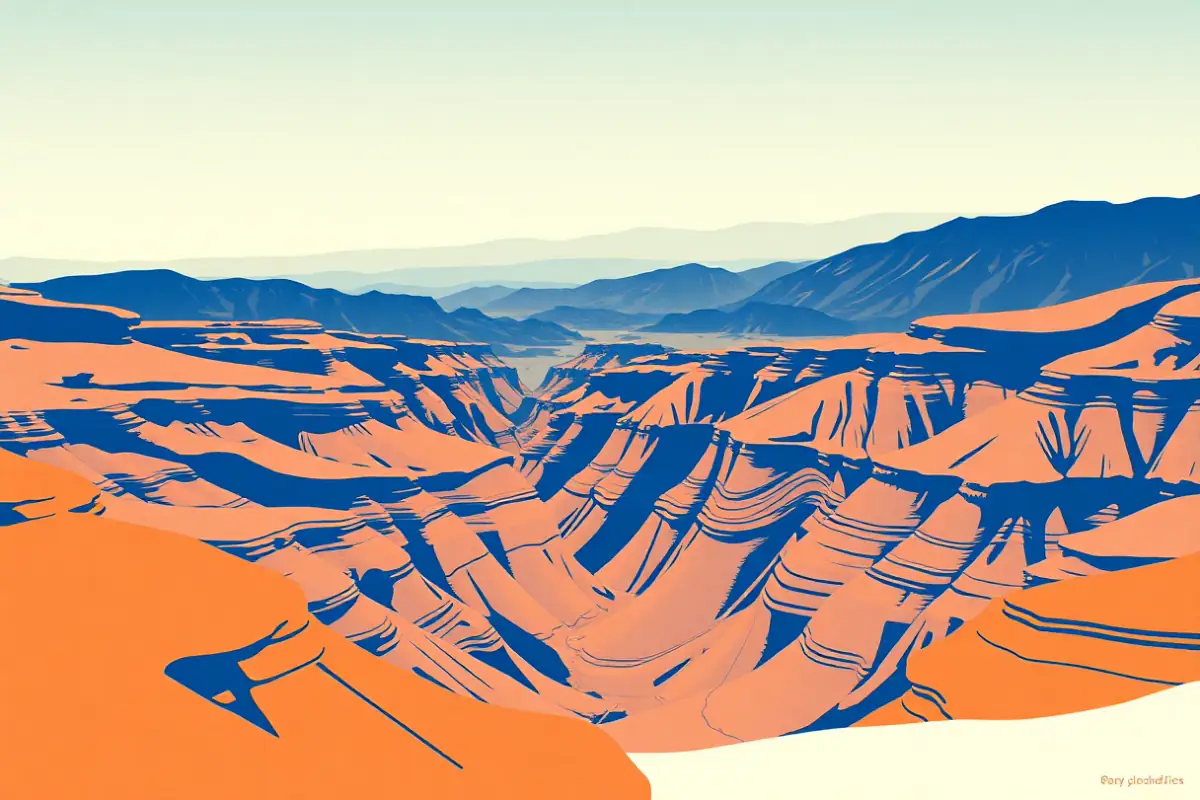


Illustrations generated with FLUX for RoamWeek, August 2026. Stylised artwork rather than photographs of the places named.
The options below are separate choices rather than a package. Read how RoamWeek chooses and orders suggestions before using any of them.
Book the separate parts
Book the parts that need booking
This is the one route in this group built around a hire car, so that decision comes first and everything else follows from it.
You book each service directly with its supplier. These separate bookings do not form a RoamWeek package.
- Flights
Muscat is the start and the end of this loop, and fares swing with the season here more than most, peaking exactly when the weather is best.
Search on Aviasales
- Stays
The loop sleeps in a different place almost every night, so the beds are the part of this trip most worth fixing in one sitting rather than daily.
Search on Booking.com
- Activities
The Wahiba camps collect guests at the edge of the sand and drive them in, which solves the one leg where the wrong vehicle actually strands you.
Search on GetYourGuide
What is worth the time, and what is not
Worth your time
- Wadi Shab early in the morning. It is the busiest wadi in Oman and there is very little shade in the gorge once the sun is up.
- A night in the Wahiba dunes. The temperature drop and the darkness after sunset are the whole experience, and a day trip gets neither.
- Nizwa on a Friday morning. The livestock market is the one moment in the week when the souq is doing what it was built for.
Skip it
- The interior between June and September. The wadis are the point of the trip and they are close to unusable in the hottest 4 months.
- Paying for a 4x4 you will not use. If your route stays on tarmac and the Jebel Shams road, an ordinary car covers it and the saving is significant.
- Trying to add Salalah. It is roughly a thousand kilometres south and belongs to a different trip, not the end of this one.
Why this order
The loop runs clockwise for two reasons. It puts the easy coastal driving first, while you are still adjusting to the roads and the heat, and it saves the mountains for the end when both feel routine. The sands sit in the middle because the desert camp is the one fixed booking and it anchors the week. Jebel Shams comes on day seven rather than earlier because it is the highest and coolest point of the trip, which makes it a better reward than an opening, and because the road back to Muscat from there is the shortest and simplest of any point on the circuit.
Compare and book with suppliers
Start with Oman, dates and travellers
Compare the travel services first, then use the itinerary below to plan each day.
- Flights
Choose your airports, travel dates and passenger count.
Search flights - Hotels
Search stays near the places in this route.
Search Booking.com - Activities
Check tours and tickets for the stops you want to keep.
Find activities
You book each service directly with its supplier. These separate bookings do not form a RoamWeek package.
Read next
- 7 days in Georgia
The other self drive route in this group, with a very different climate problem.
- 5 days in Malta
Another route where the hire car question has a real and non obvious answer.
What we checked
- Visit Oman, official tourism read 29 August 2026
- Experience Oman, Ministry of Heritage and Tourism read 29 August 2026
- Oman Airports read 29 August 2026
Why this page exists. This is the only RoamWeek route that separates the roads in Oman that genuinely need a 4x4 from the ones where a 2WD is fine, rather than treating the whole country as one answer.